Description
Please watch our video to learn more about P1, P2 and P3 cultures.
Professional Range
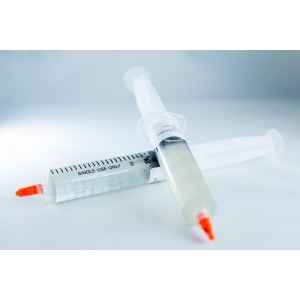
P1 cultures, also known as master liquid Cultures, are the most vigorous cultures available on the market.
P2 Cultures are made from P1 cultures by expanding them 10 folds, so 10 ml to 100 ml.
Commercial Range
P3 Cultures are made from P2 cultures by expanding them 10-fold, so 10 ml to 100 ml.
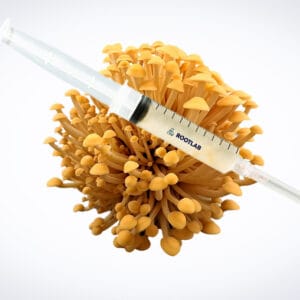
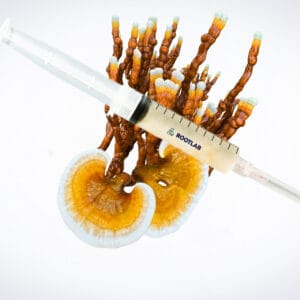
Premium Quality Paddy Straw Volvariella volvacea mushroom liquid culture for Growing Mushrooms. Liquid cultures are mycelium suspended in a nutrient-rich liquid. Our liquid recipe is vegan.
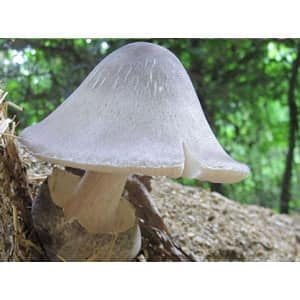
Paddy Straw (Volvariella volvacea), also known as Banana mushroom, is a gourmet mushroom and a top-fruiting type. It will only fruit above 28°C.
Paddy straw spawn takes around 3-4 weeks to colonise, Spawn to straw will take around 10 days, and fruits will begin forming in around 7-10 days after full colonization.
This mushroom is very popular and loved in Asian countries; unfortunately, we do not grow it widely in Western countries.
Do not store the culture in the fridge above 10°C as Paddy straw does not like cold temp.
How to grow Paddy straw:
- Grow paddy straw on rice straw, pasteurided with calcium hydroxide.
- Ensure proper water drainage, as paddy straw does not like excess water or overly dry conditions.
- Maintain a colonization temperature of 23°C.
- Add your spawn to the substrate and allow it to colonise.
- Let the straw colonise for 2 weeks.
- After colonisation, add gram flour as a supplement to boost pinning and fruiting.
- The fruiting temp should be 28°C
- Harvest paddy straw before the cap starts to open as generally thats when they are more dense in flavour.It is generally steamed and then eaten.
Paddy straw is a perfect combination of Nutty, Earthy, Sweet and Umami.
The liquid culture can be used in various cultivation techniques. You may introduce the liquid culture into sterilized grain jars/bags, agar Petri dishes, or another nutrient Sterile jar to expand into more liquid culture.
This mushroom liquid culture is made with the best strain we can find. It is checked every six months for its vigour and ability to fruit on a commercial scale. Each jar is tested before it is sent out. We give a 100% guarantee on our culture.
We offer High-Quality Disposable Gloves and Masks, essential for maintaining sterile conditions in your mycology projects. We also recommend you buy Biodegradable MEA agar cups for those testing liquid cultures or spore syringes before inoculating their bags. Do you need a sterile workspace? Have a look at our Still Air box (SAB).
The liquid culture can be used in various cultivation techniques. You may introduce the liquid culture into sterilized grain jars/bags, agar Petri dishes, or even another nutrient Sterile jar to expand into more liquid culture.
Did you know that we sell Mushroom culture in form of Liquid culture and Agar plate ?
All Products are shipped from Australia.
Shipping Cost – The cost of shipping will be displayed to you during the checkout process, determined by your location.
Handling Time – Items typically takes 0 to 2 days to be prepared for shipment. Please note that handling time may vary, especially during busy holiday seasons.Certain items like colonised agar plate take 7-14 days to get ready.
Shipping Time – Express post is more expensive but considerably faster than standard post.
Importing Mushroom Cultures into New Zealand
If you’re in New Zealand and want to bring in mushroom cultures from Rootlab, whether that’s liquid culture, agar plates, or spawn, you’ll need an MPI import permit first. Here’s exactly how it works.
Step 1: Check the species is approved
MPI only allows import of the following species (current as of June 2026):
**A to C**
– Agaricus bisporus (Portobello/White button)
– Agaricus bitorquis
– Auricularia cornea
– Boletus edulis
– Chlorophyllum rhacodes (Macrolepiota rachodes)
– Coprinus comatus (Shaggy mane)
**D to O**
– Flammulina velutipes (Enoki/Golden Enoki)
– Flammulina filiformis
– Lactarius deliciosus
– Lentinula edodes (Shiitake)
– Marasmius oreades
– Morchella esculenta
– Morchella importuna (Morel)
**P to Z**
– Pleurotus djamor (Pink Oyster)
– Pleurotus ostreatus (All various types of oyster)
– Pleurotus pulmonarius (Phoenix oyster)
– Stropharia rugosoannulata (Wine cap/Golden wine cap)
– Trametes versicolor (Turkey Tail)
– Volvariella volvacea (Paddy Straw)
These can be imported as mother culture (pure culture on agar or in sterile broth), spawn (pure culture on a sterile plant-based carrier), or substrate (sterile plant-based product inoculated with spawn).
Rootlab website shows what we currently stocks, the full MPI list above is what’s allowed, not necessarily what we carry or make available for sale.
Requirements mentioned here:
https://www.mpi.govt.nz/import/plants-flowers-seeds-plant-growing-products/importing-fungi-growing/steps-to-importing-fungi-for-growing
Step 2: Send us your details
Email us with:
– Your full name
– Company name (If applicable)
– Full delivery address
– Mobile number
– The cultures you’d like, picked from the species we stock
Our email: info@rootlab.co.nz
Step 3: We send you a Manufacturer’s Declaration
Once we have your details, we’ll send through a Manufacturer’s Declaration. You’ll need this when you apply for your import permit.
Step 4: Apply for your permit and pay the fees
Once your permit is approved, you can place your order at www.rootlab.co.nz. We take care of the export paperwork and freight from there.
The only thing you need to do is apply for the permit, all the details you need will be in our Manufacturing Declaration, then choose which products you want to import. Everything listed on our website is already permitted, so you won’t find anything on there that isn’t allowed.
Tip: a colonised agar plate takes 3 to 4 weeks to prepare, which lines up with permit processing times. So you can place your order as soon as you’ve applied for the permit, no need to wait for approval first. If your permit doesn’t come through, we’ll give you a full refund.